Samsung Galaxy Z Fold 7 review

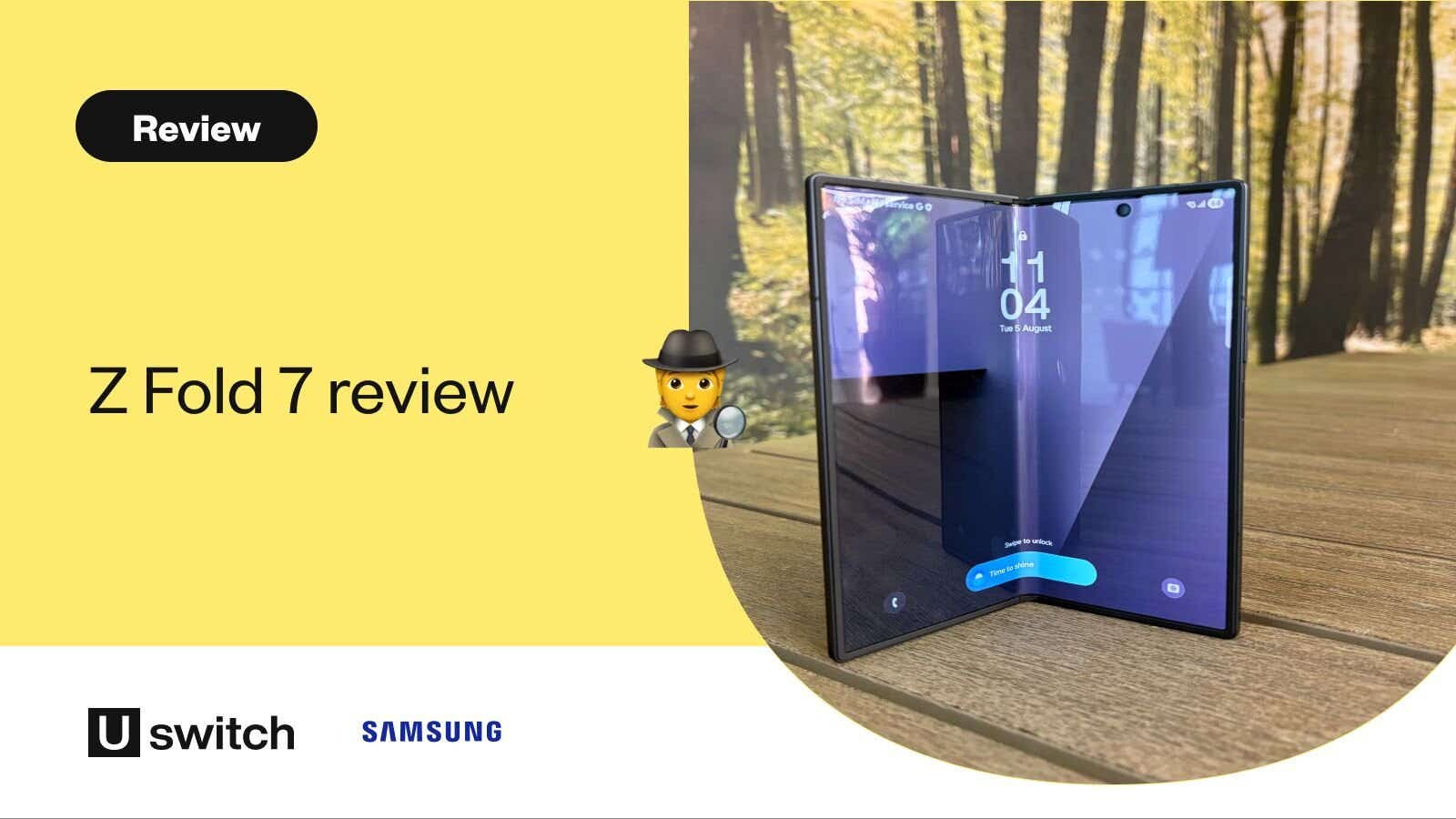
Samsung’s Galaxy Z Fold series of book-style foldable phones is where the South Korean company showcases its most innovative designs and futuristic features.
The Galaxy Z Fold 7—the seventh entry in its foldable lineup—is no exception, and while Samsung hasn’t exactly reinvented the wheel in terms of its design, there’s still plenty of updates to make it worthy of consideration when you’re considering upgrading your current handset.
So, what’s actually new this time around, and is it the foldable phone finally worth making the leap for? Let’s dive in.
Compare Samsung Galaxy Z Fold 7 deals
See our best Samsung Galaxy Z Fold 7 deals
Samsung Galaxy Z Fold 7 pros and cons
Pros
Thin and lightweight design
Bigger screens
200MP main camera performance and improved selfie capabilities
Top-notch software with Galaxy AI multi-tasking functionality
Improved Android 16 / OneUI 8
Cons
Battery life still doesn’t impress
Telephoto camera could be better
No longer has S Pen support
Design and handling

Out of the box, the Samsung Galaxy Z Fold 7 doesn’t look dramatically different from its predecessor, the Galaxy Z Fold 6, but don’t be fooled. Samsung has refined nearly every part of the design to make this the slimmest, lightest, and most comfortable Fold yet.
Unfolded, it measures just 4.2mm thick, down from 5.6mm on the Fold 6, and it now weighs 215g, making it super easy to slip into your pocket (especially compared to many flagship ‘slab’ phones like the Galaxy S26 Ultra or iPhone 17 Pro Max).
The star of the show is the new Armour FlexHinge, which uses a compact multi-rail design to evenly distribute open-and-close stress across the display. It helps reduce the crease too, and while the panel does feel slightly flatter to the touch, the crease still looks about the same. In truth, it’s something you notice less the more you use the phone.
Samsung has also reinforced its internal infrastructure, using a 50% thicker Ultra-Thin Glass with a titanium lattice underneath for added strength. On the outside, the Samsung Galaxy Z Fold 7 is protected by Gorilla Glass Victus 2 on its back, Gorilla Glass Ceramic 2 on the front cover screen, and Advanced Armour Aluminium around its frame.
It feels tough when closed and elegant when opened, meaning I was always slightly nervous to drop it when fully opened. It still has IP48-rated water and dust resistance, though the dust protection hasn’t improved from last year.

There’s no denying that the phone is striking. Closed, it looks like a regular phone with a bright, expansive 6.5-inch cover display that's now taller and wider with a more practical aspect ratio. The device feels much more like a “normal” phone in the hand, especially compared to earlier Folds. That said, the tighter hinge makes unfolding the phone a bit trickier, and you’ll need two hands to prise it open.
The updated dimensions also make the camera bump more pronounced, which can cause it to wobble when placed flat on a table. A case should help to smooth that out. Samsung offers the Samsung Galaxy Z Fold 7 in Blue, Silver, and Black, with an exclusive Mint colour available only through Samsung’s website. I tested the Black version and think it looks sleek and premium, with a matte-like finish that resists fingerprints well.
In short, the Samsung Galaxy Z Fold 7 may look familiar, but Samsung has made a real effort to make it more pocketable, durable, and nicer to use. For the first time, this truly feels like a foldable that can replace your everyday phone if you can afford the hefty price.
Samsung nails the display game yet again

Samsung has meaningfully upgraded both screens on the Samsung Galaxy Z Fold 7, and the results are truly impressive. The cover display has grown slightly, from 6.3 to 6.5 inches, and now features a more balanced 21:9 aspect ratio (up from 22:9), making me at times think it was genuinely a regular smartphone when I first turned it on.
It’s still a Dynamic AMOLED 2X panel, with a 2520 x 1080 pixel resolution and a smooth 1~120Hz adaptive refresh rate. Thanks to the wider layout, typing and navigating on the outer screen feel more natural and even easier than typing on a regular smartphone.
Inside, the main foldable display is now a generous 8 inches, up from 7.6 inches on the Galaxy Z Fold 6. It’s also a Dynamic AMOLED 2X panel, offering a resolution of 2184 x 1968 pixels, with full HDR10+ support and the same 120Hz adaptive refresh rate. The bezels around both screens have been shaved down, giving the Fold 7 a more immersive look and feel, especially when watching videos on YouTube, where it really came into its own.
Brightness levels are solid across the board. In auto mode, the main screen peaks at 1,408 nits, while the cover screen hits 1,409 nits, making both displays more than capable of handling bright outdoor conditions. While these figures are slightly lower than those of its previous model, the difference is minimal in real-world use.
One notable design shift is the return of the hole-punch selfie camera on the inner display. Samsung has moved away from the under-display camera used in the Fold 6, opting for a more traditional cutout that improves image clarity. Honestly, you stop noticing it pretty quickly.
Another important and, in my view, disappointing trade-off is the loss of S Pen support. Due to the phone’s slimmer design and the use of 50% thicker ultra-thin glass reinforced by a titanium lattice, Samsung couldn’t include the digitiser required for the S Pen. It’s a shame, particularly for note-takers and mobile digital artists, but every customer should feel slightly let down by this.
The entire Fold series is perfect for the S Pen, and in my review of the Samsung Galaxy Z Fold 6, I argued it was one of the best parts of using the device. Samsung should have done more to include it in this launch. However, the upside is a flatter, more durable screen with a reduced crease that’s harder to see and feel than in previous generations.
Whether you’re using the Samsung Galaxy Z Fold 7 folded or fully open, both displays feel premium, fluid and very easy to use. It offers one of the best visual experiences you can get on a foldable, or any phone, really.
Looking for the latest Samsung Galaxy Z Fold handsets?
Samsung Galaxy Z Fold 8: compare deals now
Browse our best Fold 8 handset contracts, or check out deals for Samsung's top-of-the-range foldable, the Galaxy Z Fold 8 Ultra.

Battery life is still playing catch-up
Despite all the clever engineering packed into the Samsung Galaxy Z Fold 7, Samsung hasn’t found room for a larger battery. It sticks with the same 4,400mAh cell found in the Fold 6, even though the phone itself is thinner.
Charging speeds haven’t changed, either: you get 25W wired, 15W wireless, and 5W reverse wireless charging — decent, but far behind rivals like the OnePlus 15, which charges at up to 120W.
Samsung says it’s prioritised thermal management and long-term safety over faster charging or a bigger battery, which is understandable, but it still leaves the Galaxy Z Fold 7 trailing many flagship phones in this department.
That said, real-world battery life shows modest improvements thanks to the more power-efficient Snapdragon 8 Elite for Galaxy chip. I could use it (albeit relatively lightly) throughout the day, only draining about 50% of the battery, slightly better than the Fold 6 provided when I tested it in 2024. Gaming and call times are also improved, although web browsing took a hit — likely due to the larger display drawing more power.
You’ll also need to bring your own charging head; Samsung only includes a USB-C cable in the box, which is a bit of an annoyance. A full top-up from 0% to 100% takes around 1 hour and 30 minutes. Overall, the Samsung Galaxy Z Fold 7’s battery life is solid for a foldable, but it won’t win any awards. If all-day power is your top priority, a standard phone will still go further and recharge faster.
Powerhouse performance…but with a few caveats

The Snapdragon 8 Elite for Galaxy chipset makes its debut inside the Samsung Galaxy Z Fold 7, and provides some serious muscle. Everyday tasks are a breeze: apps launch instantly, multitasking is seamless and AI features like ‘Now Brief’ run without a hiccup.
Elsewhere, Samsung has kept 12GB RAM rather than upgrading to 16GB, but it’s more than enough in practice. Whether juggling multiple Chrome tabs, switching between apps, or editing photos, the Fold 7 stayed cool and responsive whenever I used it.
Gaming is where the device really excels. Titles like Nitro Street Run 2 ran flawlessly, with smooth image processing and no stutter, even when playing intense game modes. That said, during extended gaming or heavy camera use, the device does become noticeably warm, especially around the rear camera housing, but it never becomes uncomfortable.
The Fold 7 is also the first phone to ship with Android 16 and One UI 8, a surprise move that gives it a cutting-edge feel from the jump. The visual design hasn’t changed much from One UI 7, but Samsung has leaned hard into AI upgrades, many of which are tailored especially for foldables.
New AI features include Multimodal AI enhancements for large screens, contextual voice commands, AI-generated image drag-and-drop, and resizable Gemini snippets that can float or live in split-screen view. You can even activate Circle to Search while gaming—no need to pause to look something up.
FlexCam integration now works with Gemini, letting you stream live camera footage into the AI assistant for context-aware suggestions. For example, it can recommend outfits based on the weather forecast at your destination, a quirky yet clever combination of AI and foldable hardware.
Storage-wise, you can choose from 256GB, 512GB or 1TB, but there’s no microSD slot, so pick your storage tier wisely. Samsung also promises seven years of OS and security updates, future-proofing this foldable for the long haul.
Finally—some serious camera upgrades

Samsung has finally given its foldable flagship a real camera boost. The Samsung Galaxy Z Fold 7 blends its signature hardware with impactful upgrades, most notably a leap to a 200MP main sensor, matching the Samsung Galaxy S26 Ultra.
Like previous generations, the Fold 7 has a total of five cameras: a triple-lens setup on the back, a front-facing selfie camera on the outer screen, and a new selfie camera inside the main display. No matter how you're holding the device, you're ready to capture the moment.
Main camera: A major step forward

The 200MP main camera is a standout addition, offering quad-pixel autofocus, optical image stabilisation (OIS), and an f/1.7 aperture with an 85° field of view. You can shoot in full 200MP, 50MP, or default 12MP ‘binned’ mode, and the in-app toggle makes switching resolutions easy.
The resulting images are vibrant and detailed, as you can see in the close-up shots I got of some flowers, which is a noticeable upgrade from the Samsung Galaxy Fold 6.
The 12MP ultrawide camera returns with some refinements: it now includes dual-pixel autofocus, a dedicated macro mode, and a wide 120° field of view. So you can expect solid results in good lighting, although distortion around the edges still creeps in on occasion.
The 10MP telephoto lens offers 3x optical zoom and up to 30x Space Zoom via Samsung's hybrid tech. It delivers sharper shots than before, though zooming beyond 10x still sacrifices detail, and the zoom shots I took of some ducks came out a bit fuzzy.


Better selfies, smarter design
Samsung's rethink of the selfie setup pays off. The 10MP cover-screen selfie camera is sharp and consistent, while the new 10MP hole-punch camera on the main display replaces the Samsung Galaxy Z Fold 6’s underwhelming under-display shooter. It now offers a wider 100° field of view, ideal for group shots.
Portrait mode on both selfie cameras has improved, but still occasionally struggles with fine edges like hair. Still, overall clarity, colour accuracy, and brightness are better across the board.
Samsung’s ProVisual Engine imaging system, which is powered by the Snapdragon 8 Elite’s Spectra ISP, is responsible for many of the camera improvements. It enhances colour, contrast, and clarity across all sensors.
Video gets a boost, too. The Fold 7 supports recording up to 8K at 30fps, with options for 4K at 60fps, and improved HDR+ 10-bit colour. Super Steady mode works well in bright conditions, especially using the ultrawide and main lenses. Overall, video footage is clean, stable, and vibrant—some of the best I’ve seen on a foldable.
Smarter AI features help with everyday tasks
Samsung’s Galaxy AI features include Photo Assist (for removing or repositioning objects), Portrait Studio, and the newer Suggest Edit tool, which automatically identifies distracting background elements and removes them with a tap. It’s powerful, but can be a little too keen, occasionally erasing things (or people) you'd rather keep.
Audio Eraser has also improved. It’s now better at cutting out background noise, such as wind or traffic, from videos, voice memos, and even phone call recordings. Drawing Assist and Writing Assist are both smoother now, too, though finger-drawn sketches still can’t compete with S Pen input, especially for a terrible artist such as myself.
One of the standout additions is Side-by-Side Editing, which lets you compare edits against the original photo in real time. Whether you're applying filters or tweaking exposure, it makes fine-tuning your shots much easier, and you can save both versions for later.
AI that (finally) plays nice with the big screen
Samsung and Google have clearly worked together to make AI features more intuitive on the Fold’s larger display. The redesigned AI Results View in Google Search now pops into a floating window instead of taking over your screen, and Generative Edit tools can appear in split or pop-out views, letting you reference your original text or images without breaking your flow.
It’s also easier to drag and drop content—like a photo or drawing—between apps, thanks to improved multi-window handling and smarter touch targets.
Circle to Search gets smarter—kind of
Circle to Search now works in games, too. During its launch event, Samsung stated that if you circle something on-screen mid-gameplay, you’ll get relevant tips.
In my testing with the simple game Bubble Shooter, the results weren’t exactly groundbreaking. I was trying to push it to help me solve the level I was on, but instead it gave me context for the game and how to play it more generally.
Circle to Search is still best used within YouTube videos, and I found it particularly useful while watching a Dune: Part Three film trailer. I circled a random moment in the trailer and was quickly presented with information about the character I had circled.
It also, more impressively, told me its release date and the best cinemas in London to watch it. The feature is also super handy for images you have taken personally while out and about. Any building, shop, or restaurant can be snapped and circled to get more information, including reviews.
Gemini Live steps in
Google’s Gemini Live has received a major upgrade. It now supports real-time visual search, meaning you can point your camera or share your screen and get contextual help from Gemini. In one test, it even diagnosed the problem with my speaker. That kind of hands-on help feels both futuristic and genuinely useful.
Top software included
The Samsung Galaxy Z Fold 7 is one of the first phones to ship with Android 16 right out of the box, even beating Google’s own Pixel phones to the punch. It also matches Google’s industry-best support promise, with seven years of OS and security updates, which is excellent news for anyone planning to hang onto their phone long-term.
Samsung’s One UI 8 sits on top of Android 16, bringing a mix of familiar multitasking tricks and new AI-powered tools. As always, you can run up to three apps at once, with a fourth floating window. The Edge Panel makes it easy to launch apps or preset app pairs, while the persistent taskbar ensures quick access to favourites. Flex Mode transforms the phone into a tiny laptop for video calls or media playback, and DeX mode turns it into a desktop-style experience when connected to an external display.
Verdict: Samsung finds its Fold again

Samsung has hit its stride again with the Galaxy Z Fold 7. While it's not without flaws—minimal improvements to battery life, slow charging, no S Pen support, and a telephoto camera that doesn't quite impress—the overall package feels far more refined and practical for the mass market than previous releases have.
The main camera is a big step up, the ultrawide is solid, and the new hole-punch selfie cam is finally worth using. Both displays are larger and more balanced, and the phone is noticeably thinner and lighter—making it one of the most pocketable foldables to date. Toss in Android 16 out of the box and seven years of software support, and you’ve got a foldable that’s easier to recommend than ever.
Samsung clearly felt the heat from rising competition and responded with fewer gimmicks and meaningful upgrades to make the phone a usable companion. The Samsung Galaxy Z Fold 7 might not be perfect, but with Apple rumoured to launch its own foldable this year, Samsung has set a high bar for what a foldable can do.
Compare Samsung Galaxy Z Fold 7 deals
See our best Samsung Galaxy Z Fold 7 deals