Samsung Galaxy S26 Ultra Review

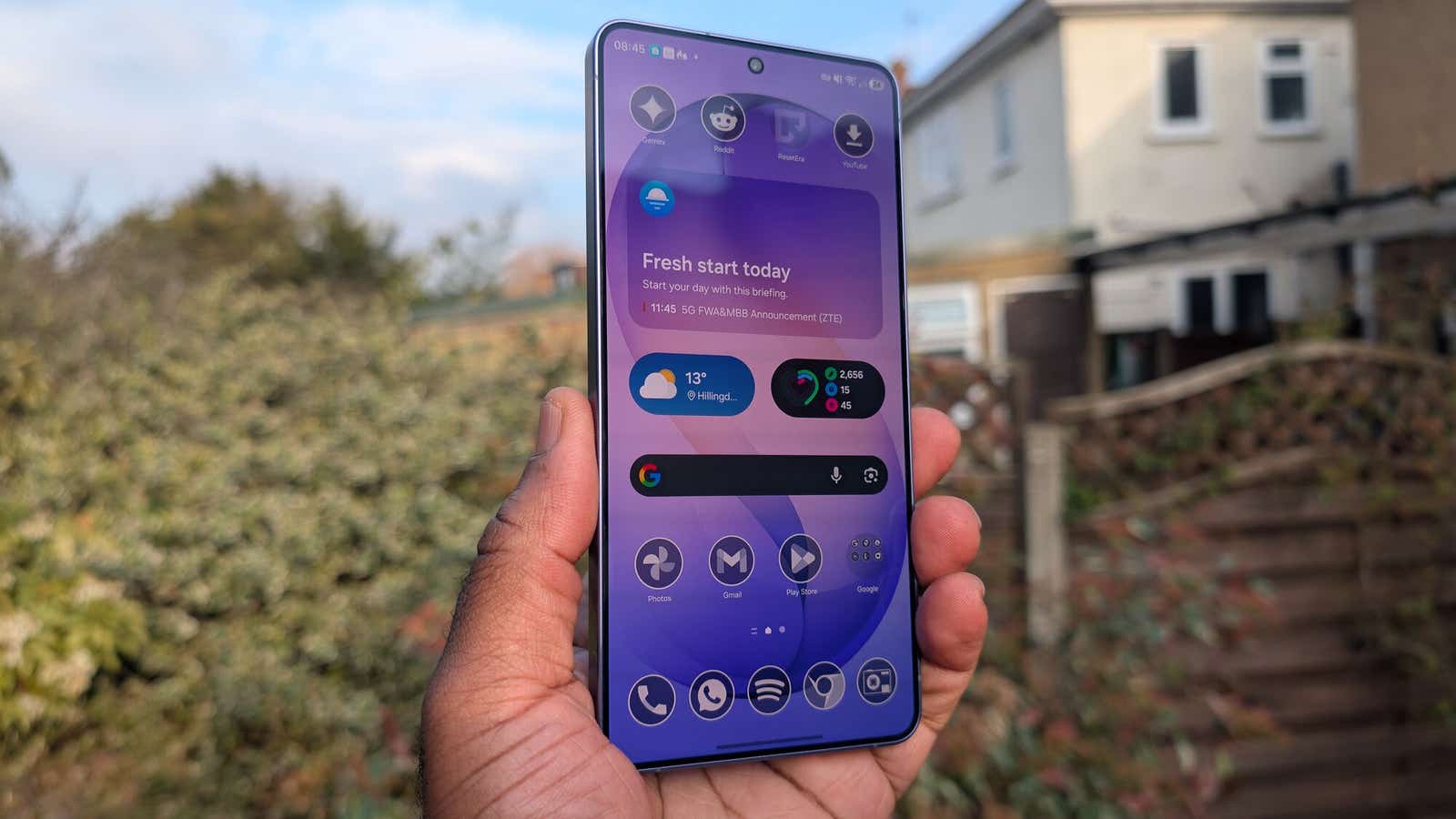
Samsung Galaxy S26 Ultra pros and cons
World's first mobile privacy display protects data at per-pixel level.
Blistering bespoke Snapdragon 8 Elite Gen 5 performance.
Best-in-class 200MP camera setup.
S Pen stylus remains a unique smartphone productivity tool.
High starting price, esp. for base model offering 256GB of non-expandable storage.
5,000mAh battery lags behind modern silicon-carbon rivals.
No Bluetooth for S Pen, functions solely as a traditional stylus.
Discerning smartphone consumers are demanding more than incremental processor bumps and slightly brighter screens, making for a highly contentious 2026.
With the release of the Galaxy S26 Ultra, Samsung has adapted to this shift by focusing towards a heavily refined, AI-driven daily experience.
Headlined by a genuinely innovative, hardware-level Privacy Display and a bespoke Snapdragon 8 Elite Gen 5 chipset, this device is designed to be the ultimate productivity powerhouse for mobile professionals.
However, as starting prices creep ever higher and some beloved legacy features are quietly retired, the question remains whether these ambitious software pivots justify the steep cost of entry...
Read on for our comprehensive Samsung Galaxy S26 Ultra review.

Design and specifications
Aesthetically, the Galaxy S26 Ultra is a striking piece of industrial design that commands immediate attention.
Samsung has refined its signature squared-off aesthetic, somehow squeezing an enormous 6.9-inch display into a device that is actually both thinner and lighter than its predecessor.
Measuring a sleek 7.9mm thick and weighing exactly 214g, it sits far more comfortably in the hand than the S25 Ultra, making prolonged use relatively breezy.
However, there's a reason that the Samsung website compares this new incarnation's weight and size to the S24 Ultra by default...as there's barely anything in it versus last year's model.
We're talking just 4g lighter and 0.3mm thinner versus the S25 Ultra - with a largely similar design.
If it's not broke...there is a shift to completely flat side rails also provides a more secure grip when typing out lengthy emails, while the sole keys of volume rocker and power button on the device’s right flank offers a satisfyingly crisp press that reinforces thoroughly premium build quality.
On that topic, a hot subject has been Samsung’s decision to ditch the titanium of the past two generations, returning to what it has dubbed an Armour Aluminium 2.0 frame.
Rationale was a necessary engineering choice, citing titanium's rigidity made it too difficult to achieve a record-breaking 7.9mm thinness while maintaining internal thermal dissipation.
In reality, the chassis feels exceptionally tough, and the weight savings are an undeniable upside, bolstered by a display protected by Corning’s Gorilla Armor 2 glass.
This boasts both incredible scratch resistance and drastically cuts down - but doesn’t remove entirely - on-screen glare. It almost entirely eliminates overhead reflections in brightly lit offices and makes reading outdoors a revelation.

For this review, we tested the Cobalt Violet edition. It is a masterclass in premium tech-chic, featuring a smooth, matte glass back panel that thoroughly resists fingerprint smudges while catching the light beautifully in varying hues at different angles.
There are multiple colour variants as is always the way with Samsung - with black, sky blue and white models supporting the lead violet colourway.
Two unique models - pink gold and silver shadow - are exclusively available directly from Samsung.com and their Experience stores on the high street, one reason - but certainly not the most compelling - to opt for purchasing from the manufacturer…but more on this later!
Naturally, the handset boasts a top-tier IP68 certification. This guarantees complete protection against dust ingress and allows the device to survive immersion in up to 1.5 metres of fresh water for a maximum of 30 minutes.
Whilst this rating ensures the device is fully protected against heavy rain or accidental spills, this durability does not extend to maintaining usability in wet weather.
Unlike the Aqua Touch technology championed by OnePlus, the Galaxy S26 Ultra struggles to register accurate touch inputs when touching the screen with wet fingers, making replying to a message in moist circumstances - whether in the rain or tweeting in the shower - a somewhat challenging experience.

The long-standing S Pen continues to sit flush inside the bottom housing of the Galaxy S26 Ultra, releasing with a satisfying tactile click.
As the last surviving vestige of the beloved Galaxy Note series, a built-in stylus is an absolute rarity in today's homogenous smartphone market.
For power users, it remains an unparalleled tool for signing documents, precision photo editing, and sketching out quick ideas - yet Samsung has completely stripped the S Pen of its Bluetooth Low Energy support for the second year running.
Claiming low usage, the net impact is that the stylus can no longer be used as a remote clicker to snap group photos from across the room, nor can Air Actions be used to navigate presentation slides from a distance.
The S Pen is now strictly a display-bound tool. While it continues to provide a brilliant writing experience, the loss of these remote capabilities will undoubtedly frustrate those long-time Galaxy Note loyalists.
The phone does offer seamless connectivity via Wi-Fi 7, Bluetooth 5.4, and a convenient dual-SIM setup featuring eSIM support for frequent travellers, but headphone support is limited to USB-C in the loss of the headphone jack.
So some puts and takes overall, minor tweaks and refinements over earlier models, but the Galaxy S26 Ultra is already standing good when it comes to vital statistics.
The display is bound to be even better...
Display and audio

If there is one area where Samsung consistently dominates, it is screen technology, and the 6.9-inch Dynamic LTPO AMOLED 2X display on the S26 Ultra is nothing short of breathtaking.
With a QHD+ resolution of 3120 x 1440 pixels, the panel delivers crisp visuals, incredibly vivid colours, and true, deep blacks.
Watching HDR content on platforms like Netflix remains a highly immersive experience, as the panel renders fine shadow details that lesser screens simply crush into muddy grey.
Whilst great it it's own right, the S26 Ultra is home to an 8-bit colour display - able to show 16.7m colours - rather than the 10-bit displays of the likes of Apple and OnePlus' finest, which can show over 1 billion.
This is a bit of a shame for those looking for Samsung's latest to deliver a display upgrade to resolve things like colour banding and accuracy of image reproduction (which is addressed software-side, rather than a true panel upgrade), as well as expecting a hardware improvement versus last year's model...more iteration on a good thing in the S26 Ultra over a big leap forward.
The fully flat display does support a variable refresh rate that scales seamlessly from 1Hz up to 120Hz, ensuring buttery-smooth scrolling through social feeds, while dialling back down to preserve battery life when reading static text - a key decision given the relatively light battery against some competition.
There remains a pinhole to house the front-facing camera on this device, no snazzy under-display technology here to hide it - but it's rarely a distraction.
The biggest innovation on the S26's Ultra's face is the world-first hardware privacy tech on a mobile device, officially dubbed Flex Magic Pixel.
By toggling a quick setting, the screen narrows its viewing angles at a hardware level, a highly-seamless and sophisticated implementation into Samsung’s One UI operating system.
The clever stuff comes in just how granular this is, with the hardware allowing for selective, zone-based activation across the display.
The privacy can be programmed to engage automatically only when specific apps are opened - for example, the screen can operate normally while browsing the web, but the moment a banking app is opened or there’s a need to put in a password, the screen darkens to onlookers solely for those areas.
The display can also apply hardware privacy filters solely to incoming notification banners, meaning a private text message or pop-up will only be legible to the viewer, while the main content remains visible to those around.
While there is a slight, measurable hit to overall colour contrast in Maximum Privacy Protection mode - the display gets a lot lighter and loses refresh rates by around half - it is a phenomenal feature for commuters who want to read sensitive work documents without worrying about prying eyes on a crowded train.
When sharing the screen becomes an option again, the display reaches a blinding peak brightness of 2,600 nits.
Sonically, the dual stereo speakers utilise Dolby Atmos to provide a rich, balanced output with a surprising amount of spatial separation and bass for a mobile device.
This is beautifully complemented by a haptic vibration motor that provides tight, precise feedback when typing or navigating the UI - impressive hardware stuff all round, as is to be expected from Samsung.
Camera capabilities

Photography is an area where the Galaxy S26 Ultra refuses to compromise - working overtime to keep the crown.
The device boasts a completely overhauled optical path and a highly sophisticated AI pipeline powered by the new ProVisual Engine.
At the heart of this system sits the massive 200-megapixel main sensor, paired with a significantly wider f/1.4 aperture, allowing for a 47% increase in light intake compared to last year's model.
In practical terms, this creates a beautifully shallow, natural depth of field, helping achieve stunning subject separation without relying on software edge detection.
The sheer resolution allows for advanced 16-in-1 pixel binning.
The resulting 12.5-megapixel daily snaps possess an incredible amount of dynamic range, easily balancing blown-out skies and deep shadows in high-contrast daytime environments.
Samsung has also applied a new anti-reflective coating to the lens elements to drastically reduce lens flare when shooting directly into streetlights or the midday sun.

Crucially, Samsung has finally eliminated the frustrating shutter lag that plagued previous generations. This improvement comes courtesy of the new Zero-Gap Shutter technology.
By using the neural processing unit to continuously buffer frames in the background, the camera fires the exact millisecond the button is tapped, making it infinitely easier to capture fast-paced sports or erratic pets without missing the decisive moment.
The colour science has also been refined to prefer more true-to-life tones, dialling back the aggressive saturation of colour and hyper-realism that Samsung (and their fans) historically favour - it's a change entirely for the better.
A Gemini-generated walking tour around Barcelona allowed the opportunity to capture everything from vibrant city scenes, gorgeous Gothic architecture and bustling markets.


The main lens is flanked by a highly versatile supporting cast of a 50-megapixel ultra-wide camera, a 10-megapixel 3x optical telephoto, and a massive 50-megapixel 5x periscope lens.
Switching between these four focal lengths in the viewfinder feels entirely seamless, exhibiting no stutter, discernible handover or jarring colour shift.
The 5x lens has been bumped to a brighter f/2.9 aperture, and this specific upgrade is a game changer for concert goers or wildlife enthusiasts.
It ensures zoomed-in shots remain sharp and vibrant even as ambient light drops. Pushing past the optical limits, the digital zoom remains highly usable up to 30x.
The famous 100x Space Zoom is still present, relying on enhanced generative AI to clean up text and smooth out distant objects with startling clarity.
The below shows a series of images of a statue quickly taken at 1x, 30x and 100x zoom, just to demonstrate the imaging prowess of Samsung's finest.


The Ultra sets itself apart from the base S26 models with a dedicated AI Image Signal Processor (ISP) driving both the telephoto and 12-megapixel selfie lenses.
This chip maps highlights and shadows with incredible precision to render highly accurate skin textures and ultra-clean night shots (a selection further below).
Low-light portraits are particularly impressive, preserving fine details like individual cracks and crevices in buildings that lesser cameras would smooth over.
Within the Expert RAW application, enthusiast photographers will find a new Virtual Reflector AI feature.
This tool identifies shadows on a subject's face and bounces virtual light onto them in real time, essentially simulating a professional studio setup on a slender smartphone.
The app also includes built-in astrophotography guides and digital neutral density filters for capturing long exposures of moving water - all helping budding photographers get the most out of the Galaxy S26 Ultra.


Check out the latest Samsung Galaxy deals on Uswitch


Videographers have been heavily catered to in this generation.
The Optical Image Stabilisation (OIS) has been enhanced into a feature called Horizon Lock. This allows for the handset to literally be rotated a full 360 degrees while recording in 4K at 60 frames per second, keeping footage perfectly level with the horizon.
If it's all about the absolute highest resolution, 8K recording is still available and benefits immensely from the increased light gathering capabilities of the main lens.
Furthermore, the introduction of the Advanced Professional Video (APV) codec allows for near-lossless 10-bit and 12-bit colour recording.
This represents a massive jump for anyone who does professional colour grading in post-production software, offering immense flexibility to push and pull shadows without introducing severe artifacting.
So a combination of old and new to make for another best-in-class smartphone when it comes to imaging - albeit not a massive leap beyond Ultras past.


Performance and software
Under the bonnet, the Galaxy S26 Ultra is powered by the bespoke Qualcomm Snapdragon 8 Elite Gen 5 for Galaxy chipset - the preserve of the top-tier model this time around, whilst the S26 and S26+ will be rocking Exynos 2600 chips on this side of the globe.
This 3nm processor delivers blistering speeds that effortlessly trade blows with Apple's latest silicon. Paired with either 12GB or a massive 16GB of RAM, it handles everything from 4K video rendering to demanding gaming titles at maximum settings without breaking a sweat.
The 16GB RAM boost is especially vital this year, as it provides the necessary headroom for Samsung's Personal Data Engine (PDE).
This software pivot is crucial, as by processing generative AI tasks locally, the S26 Ultra effectively protects privacy while eliminating the annoying latency associated with cloud-pinging AI models.
The voice transcription, live translation, and document summarisation feel truly instantaneous, bringing it that much closer to being a natural aspect of daily use. The features are prompted liberally rather than forced, and many times become a smart way to use the S26 during a daily commute to find a pesky hidden setting.
One may think that having Anthropic integrated on the Samsung Browser, Gemini complete with Circle to Search and all its benefits throughout the device and Samsung's own Bixby might be AI-overkill, but they all very much keep to themselves and have unique situations that each is most suited for.
The device runs on Android 16, overlaid with Samsung's heavily refined One UI 8.5 - a software experience that remains an absolute masterclass in smartphone interface design.

It is exceptionally slick, highly customisable, and leans heavily into practical Galaxy AI features.
One UI remains a profoundly refined and intuitive ecosystem that simply works to a noticeably higher standard than the clunkier Android overlays found on the a number of competing devices.
Given it's that daily experience that makes or breaks a device way beyond the tale of the tape, it's important to remember just how great a Samsung device is to use...and equally that's where a large part of that premium comes from.
Best of all, Samsung has pledged a massive seven years of major Android OS upgrades and security patches.
This guarantees investing into the S26 Ultra will mean support well into the Space Year 2030s.
Battery life and charging
Powering a 6.9-inch display and a heavy-duty processor requires serious stamina, and this is where the S26 Ultra begins to show its age against aggressive competition.
Samsung has stubbornly stuck to a traditional 5,000mAh battery - while their smart battery management is admirable, the drop in overall endurance is immediately noticeable if coming from a flagship device featuring modern silicon-carbon technology, like Oppo’s Find X9 Pro…a rare situation, but one in which I found myself in and able to compare and contrast the sheer stamina.
During our rigorous weekend testing, we relied on the phone for two hours of GPS navigation on 5G, continuous Spotify streaming, scrolling through social media, and capturing gigabytes of 4K video.
We reached bedtime with roughly 15% battery remaining. It will comfortably get through a single day, but the days of two-day battery life are a bit of a stretch...Samsung’s consideration for high-density silicon-carbon batteries does need to be front-of-mind if they want to keep pace in the modern flagship endurance race.
When a top-up is needed, the device greatly benefits from the new 60W Super Fast Charging 3.0 standard - a highly noticeable upgrade over the older 45W Super Fast Charging 2.0 found on previous generations - making up some daylight between Samsung and the Chinese competition - taking the phone from completely dead to a 75% charge in roughly 30 minutes.
So while peak wattage increases may sound narrow on paper, the upgrade is capable of sustaining those maximum charging speeds for a much longer duration before thermal throttling kicks in to protect battery health.
It also supports 25W Qi2-certified wireless charging and reverse wireless charging for topping up earbuds on the go.
However, a major point of frustration is that the Qi2 implementation lacks built-in magnetic alignment, meaning a compatible MagSafe-style case to get that secure snap is required.
Furthermore, the 60W charging adapter is noticeably absent from the box, requiring a separate purchase - or a handy portable charger - to unlock those blazing speeds.

Samsung Galaxy S26 Ultra UK pricing and availability
The single biggest hurdle for anyone considering the Samsung Galaxy S26 Ultra is the cost of entry. Unapologetically pushing well past the £1,000 mark, the base 12GB RAM and 256GB Storage variant retails for a hefty £1,279.
The model above this offers 12GB of RAM and 512GB of storage for £1,449, topping out at a mega £1,699 for 1TB of memory and a bump up to 16GB of RAM.
In a smartphone era dominated by high-fidelity Spotify lossless downloads and massive 4K movie files, offering a mere 256GB as the standard tier on a phone this expensive does feels particularly harsh, a limitation which is compounded by the lack of expandable microSD storage.
However, Samsung is renowned for its aggressive launch promotions. The manufacturer currently offers highly generous trade-in discounts of up to £500 on its official UK store for older flagship devices.
Furthermore, early buyers can double their storage to 512GB or 1TB - a £170 saving in each instance - at participating retailers at no additional charge, but this is very much a time-limited offer in that all important pre-order window.
These specific offers and the free storage upgrade are officially ending on the 10th of March, so be quick!
While the sheer cost is undeniably steep, this time-sensitive double data promotion helps early adopters easily navigate the storage shortcomings, making the overall upgrade significantly more appealing - and cost-effective - for long-time Samsung loyalists.

Final verdict
The Samsung Galaxy S26 Ultra is an absolute triumph of flagship design and uncompromising engineering.
It delivers exceptional performance, a genuinely innovative privacy display, and a highly refined, professional-grade camera system - whilst the One UI software experience continues to set the gold standard for experiencing the Android ecosystem.
Prospective owners will need to brace themselves for the eye-watering price tag, the undeniably large device footprint, and battery tech that can be seen to be falling a little behind the curve.
If a professional, power user, or simply someone who desires an incredibly durable and sophisticated smartphone that replaces a notepad, compact camera, and portable console all in one go, Samsung’s Galaxy S26 Ultra is a phenomenal piece of hardware that we recommend with little reservation.
