Nubia Z80 Ultra Review

Nubia Z80 Ultra pros and cons
Uninterrupted 144Hz OLED display.
Massive 7,200mAh battery with 80W charging.
35mm primary custom lens makes for impressive photos.
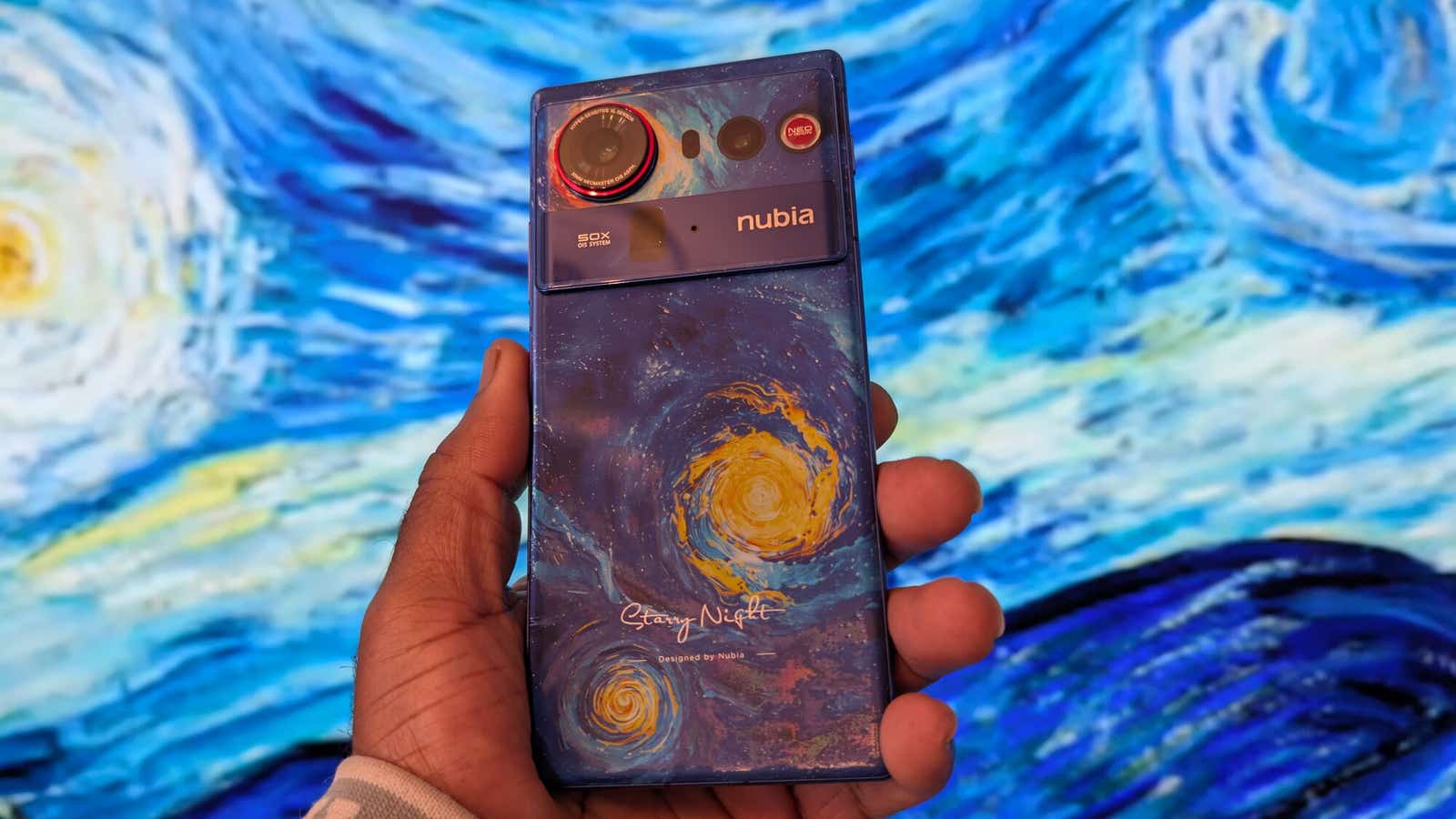
Gorgeous textured rear on Starry Night variant.
No eSIM support.
Under-display selfie camera can compromise image quality.
Software experience needs real refinement.
Nubia’s Z80 Ultra continues the Chinese phone maker’s tradition of delivering top-flight photography features, a unique display, and immense raw power in an affordable package.
Given the highly competitive nature of the market, does this visually arresting device paint a perfect smartphone picture?
Read our Nubia Z80 Ultra review to find out more.


Design and specifications
Nubia rarely misses when it comes to device design, and the Z80 Ultra proves no exception.
The thoroughly modern lines embody an industrial, perfectly flat-edged aesthetic that lends an immediately premium feel to the device.
The front of the device is a stunning achievement, delivering a practically bezel-free - and notch-less - display. The selfie camera is nearly invisible, thanks to Nubia’s 8th-generation Under-Display Camera (UDC) tech, making for an unbroken view across its glass surface, continuing the theme of clean lines with a flat finish.
A very deliberate camera housing dominates the rear top-third of the Z80 Ultra, where a trio of snappers are boldly emblazoned with the Nubia logo, as well as an eye-catching red ring around its leading camera that proudly highlights its photographic credentials.
When it comes to colours, there are variants of the device in black - where the camera array takes on a glossy finish to contrast against the dusky hue of the rest of the Z80 Ultra, as well as a white variant which still manages to look elegant and understated amongst the red accents of the dedicated camera button.

However, we were fortunate enough to get the signature ‘Starry Night’ edition in for review, which certainly makes for a bold statement.
Micro-etching technology takes Vincent van Gogh’s iconic painting and transposes it onto the Ultra’s rear glass panel, making for not only swirling blues and vibrant yellows that catch and reflect light beautifully, but also a tactile raised finish on both the rear and sides that evokes actual brush strokes and swirls.
It’s a bold and beautiful statement device in this variant, with little compromise to grip and durability - in a world of identi-kit smartphones, Nubia deserves kudos for doing something different, and tastefully - if far from subtly.
The super-flat side profile cuts a commanding figure, accommodating its massive internals with a thickness of 8.6mm and a substantial heft of 227g.
An honourable mention has to go to the presence of the customisable slide key and the dedicated physical camera button on the side.

This tactile slider allows for immediate access to the camera, making it perfect for capturing fleeting moments, whilst the camera button just makes it all the more natural to pop it in landscape and take a photo.
The Nubia Z80 Ultra also doesn’t compromise when it comes to durability, sporting both IP68 and IP69 ratings for water and dust resistance respectively - an increasingly common bullet for flagship hardware, but still entirely welcome at this price point.
Flagship credentials extend to its innards, with Qualcomm’s Snapdragon 8 Elite Gen 5 offering up the best in current-gen performance, a dedicated gaming engine borrowed from sister brand Redmagic, and a whopping 7200mAh battery to ensure it also has the stamina to keep up.

One entirely strange discovery when setting the Z80 Ultra for review was the absence of eSIM support. Once the reserve of travel SIMs, a digital SIM is an incredibly convenient way to switch between devices, so whilst there’s space for two physical SIMs, it was an odd omission that made life a tad difficult to get going!
Thankfully I found a work SIM to pop in and get going…but a point to note for those already embracing the latest in telephony technology.
Topping out at 1TB of storage and 16GB of RAM, it’s certainly got the specs on paper to turn heads, almost as much as its striking looks.
So the Nubia Z80 Ultra proves to be a sterling sequel at first glance, delivering all of the brushstrokes needed to impress.
Display and audio
Strengths continue when delving a little deeper into sight and sound, starting with a 6.85-inch AMOLED BOE X10 display, certainly one of its standout features and seemingly another aspect shared with the Redmagic 11 Pro.
A gorgeous 1.5K resolution of 2688 x 1216 pixels lends crisp visuals, vivid colours, and excellent contrast - as well as housing an ultrasonic fingerprint sensor for added security.
The expansive screen supports a blistering 144Hz refresh rate, coupled with low blue light certification and a 3000Hz instant touch sampling rate. Given the focus on gaming and capturing content for the Z80 Ultra, a high quality display is the ideal complement.
Reaching a peak brightness of 2000 nits, great visibility is possible even in direct sunlight, but there is more than a hint of glare due to it not having the best anti-reflective coating - as the images of the device can attest.
That said, the core brightness does offer a significant compromise, still making it capable for outdoor photography and multimedia consumption, with a decent level of colour reproduction and accuracy, spanning 100% of the DCI-P3 colour gamut for vibrant and realistic visuals.


Ears are equally blessed with a pair of dual stereo speakers delivering immersive sound, thanks to support for the DTS:X Ultra and Snapdragon Sound standards to provide a balanced audio output, offering a generous amount of bass, clear mids, and sharp highs.
Some quality is lost when pumping the volume up too loud, causing a bit of rattle in the phone’s frame if the audio is particularly bassy. However, the sound remains decent on the whole.
Don't expect a headphone jack, however - another common flagship trait adopted by the Nubia Z80 Ultra.
Camera capabilities

Photo snapping remains a key selling point for this device, and the Z80 Ultra’s rear array offers up a strong initial effort, leaning heavily into its photography branding and professional-grade optics.
The device is equipped with Nubia’s 5th-generation custom dual-main camera system, fundamentally changing how users approach mobile photography.
At its core, a 50-megapixel main sensor does the heavy lifting, with a custom 35mm equivalent focal length.
The purpose is that a 35mm lens captures the world more authentically, aiming to match the perspective of the human eye.
Marry that with a massive 1/1.3-inch Light & Shadow Master 990 sensor and large f/1.7 aperture - a step up from the Z70 Ultra’s 1/1.56-inch effort - and resulting images are stacked with detail, a more natural depth of field, as well as improvements in all-important low-light capture.
This focal length excels at street photography and portraiture - complete with a dedicated mode for this purpose, keeping context intact and letting emotion live in the frame. Subjects appear exactly as you see them in real life, avoiding the edge distortion common in wider standard lenses.


Taking it to Camden High Street during Lunar New Year was a good test of capturing bright and vivid street awnings on buildings, and accuracy remained impressive in stopping short of oversaturation.
Expanding the visuals is another 50-megapixel lens - this time an ultra-wide with an 18mm focal length. It features a large 1/1.55-inch optical format and a wide f/1.8 aperture, making it one of the most capable ultrawides currently available on the market.
This lens easily makes room for grand architecture, sweeping travel vistas, and crowded scenes.
The precision of the 18mm lens ensures wide compositions maintain their structural integrity and sharpness. Furthermore, this lens includes autofocus and impressive 5.5cm macro capabilities, allowing you to get up close and personal with your subject.
Rounding out the rear array is a 64-megapixel periscope telephoto lens. This lens natively operates at a 70mm equivalent focal length with an f/2.48 aperture and Optical Image Stabilisation (OIS), helping in achieving steady, yet detailed zoom shots.
It seamlessly provides reach for distant subjects and doubles as an incredibly flattering lens for tight, compressed portraits.


The unique 35mm main lens provides a distinct advantage for videography, naturally framing subjects with a cinematic, documentary-style perspective that standard smartphone lenses simply cannot replicate.
OIS on both the main and telephoto lenses works in tandem with advanced Electronic Image Stabilisation (EIS) to aggressively eliminate micro-jitters and smooth out heavy footsteps. This ensures your footage remains incredibly steady, even when filming active scenes on the move or punching in with the optical zoom.
Nubia has also paid surprisingly close attention to the accompanying audio experience, outfitting the Z80 Ultra with an impressive five-microphone array designed for superior directional sound capture and background noise reduction.
Combined with an extensive suite of manual video controls and the tactile satisfaction of using the physical dual-stage camera button to quickly trigger recordings, the Z80 Ultra provides a comprehensive toolkit for content creators on the move.
Nubia complements all this impressive hardware with a dedicated physical camera button. This switch allows you to shallow-press to focus on an image before snapping a photo, emulating the functionality of a dedicated digital camera.
You can also bypass the lock screen entirely by holding the button down, ensuring you never miss a shot.


When it comes to moving pictures, the Z80 Ultra keeps pace as a capable device. Powered by the immense processing muscle of the Snapdragon 8 Elite Gen 5, the device effortlessly captured robust 8k footage at 30 frames per second without breaking a sweat or generating excessive heat.
For those who prioritise higher frame rates, it also offers silky 4k recording at up to 120 frames per second, providing content creators with excellent flexibility for high-quality slow-motion edits and professional-grade post-production.


Shutter speed is also rapid, an improvement on prior iterations and makes for fewer lost moments.
Those looking to take this to the next level can shell out an additional £110 for the full Retro Kit, turning the device into a heavily Leica-inspired photography powerhouse, complete with ergonomic grip and even larger shutter button - a bit much, but a welcome option for those seeking to merge the thoroughly modern with an old-school feel.
Flipping to the front, however, is where things lose their lustre. The Z80 Ultra’s 16-megapixel selfie camera is beautifully (almost) hidden beneath the display, but it does compromise image quality in the process. Photos with this lens do lose detail and accuracy as software-side corrections fail to effectively compensate for hardware limitations.
The camera does tend to struggle with any efforts to capture under brighter backlighting and equally find low-light situations more challenging.
Lastly - and we’ll get onto this more in a moment - there are weird moments of glitchy software and untranslated menu elements, particularly when a flood of Chinese characters would pop up and obscure the screen during attempts to use burst mode or take selfies on occasion.
Was a difficult one to replicate consistently, but was enough to take some of the sheen off of the device’s otherwise strong photography credentials.
Decent on balance, but selfie skills below expectations and some software snags are a bit of a dent in otherwise strong performance from the Z80 Ultra.


Check out the latest mobile phone deals on Uswitch
Performance and software
Powered by the latest Qualcomm Snapdragon 8 Elite Gen 5 chipset, the Z80 Ultra delivers great raw performance for the most intense tasks. This octa-core processor, paired with either 12GB or 16GB of LPDDR5X RAM, ensures seamless power management.
To keep things running smoothly, Nubia has implemented a Redmagic-inspired gaming engine along with an advanced cooling system, using composite liquid metal and a 3D vapour chamber, ensuring everything maintains peak performance during heavy sessions.
The Nubia Z80 Ultra is powered by the latest Android 16 software, reskinned as MyOS paired with AI smarts from Nebula - leaning heavily into modern smart features, integrating Google's Gemini directly into the interface alongside Circle to Search functionality.
The Nubia AI software suite also includes everything from text assistance, wallpaper generation, live translation (both Google’s own and from the manufacturer) and even native subtitling or translation during calls - just as pervasive as we’re seeing in the current raft of smartphones, but not so much so as to become a distraction due to a relatively light smattering of prompts.

Unfortunately, there is a real gap between the overall user experience versus the firmly premium hardware. Using the phone on a daily basis can prove a little confusing at times, with some localisation issues and mistranslations being a sporadic occurrence, depending on the function.
The Z-Board news feed is a jarring shift to an ad-filled maze of non-localised and questionable content, complete with bloatware and links to recommended free-to-play apps.
It’s optional, but does detract from the elegant experience found elsewhere on the device as well as a step behind rivals, even those using Google’s no-frills Discovery platform.
The software problems do extend to using the native photo app, so seeing completely untranslated Chinese characters within the camera menus and AI editing tools is incredibly jarring.
All in all, the software has made some improvements over previous iterations, but when being served in front of an international audience, Nubia’s Nebula OS does really need a pass of polish and refinement to keep up - making for one meaningful drawback to an otherwise stellar piece of technology in the Z80 Ultra.
Expect three years of security and Android updates from Nubia on this device, as per their standard for international releases.

Battery life and charging
Given the importance of battery life to consumers, we're glad to say that this is one area where the Z80 Ultra doesn’t hold back - a 7,200mAh battery definitely sits near the top of the smartphone tree when it comes to juice.
A full day of browsing, music and calling - as well as snapping - was a cinch for the device during testing, with multiple days of use equally viable.
When the need to charge does eventually arise, the Z80 Ultra is exceptionally capable. Up to 80W wired fast charging - unfortunately an additional £30 outlay as Nubia has removed it from the box of the global model - is possible, as well as similar speeds wirelessly.
Pop it on a compatible charging stand or plugging it in provides swift top-ups. With such a durable device when it comes to longevity, it’s simple to keep the Z80 Ultra fully powered.
Buyers will need to purchase the official 80W Nubia charger separately to achieve the maximum advertised speeds across both charging methods, although a Type-C cable and basic transparent case are both included in the packaging.
Nubia Z80 Ultra UK pricing and availability
The Nubia Z80 Ultra is available now worldwide in an array of storage variants based on colour, and does remain incredibly competitive given the flagship specifications - from just £579 for 12GB of RAM and 256GB of storage in the base black model on their website.
Space doubles to 512GB and RAM gets a boost to 16GB for a meaningful jump to £709 in all three styles - including Starry Night - whilst we top out at 1TB of storage and 16GB RAM for £799, which is currently only available for the black version.
To make the deal even sweeter, Nubia offers a £15 discount for first-time buyers who purchase directly through their website.
It’s tough to argue with the value on offer here, it’s a premium full-screen experience and professional-grade camera hardware at an accessible pricepoint.

Final verdict
The Nubia Z80 Ultra establishes itself as a strong smartphone sequel, with a few areas of improvement keeping it short from greatness.
On the hardware front, it delivers excellent performance, a true full-screen display, and unmatched rear camera versatility, but sacrifices have been made in imaging quality in its quest to deliver a bezel-free, vibrant AMOLED display with a 144Hz refresh rate.
The Snapdragon 8 Elite Gen 5 chipset ensures blistering raw power, well harnessed by leveraging Redmagic smarts for impressive gaming credentials, whilst the 5th-generation custom 35mm and 18mm optics offer exacting photography standards.
Furthermore, the gargantuan 7,200mAh battery easily outpaces the competition, all at a compelling price.
Buyers simply need to brace themselves for the lack of eSIM support, a sometimes unpolished software interface and a compromised selfie camera, the only areas preventing us from putting our stamp on the Nubia Z80 Ultra without reservation.
If you are willing to look past the operating system to get your hands on incredible rear camera hardware and phenomenal battery life, the Z80 Ultra remains an absolute unit, fit for Van Gogh’s seal of exacting aesthetic approval.
