Home insulation

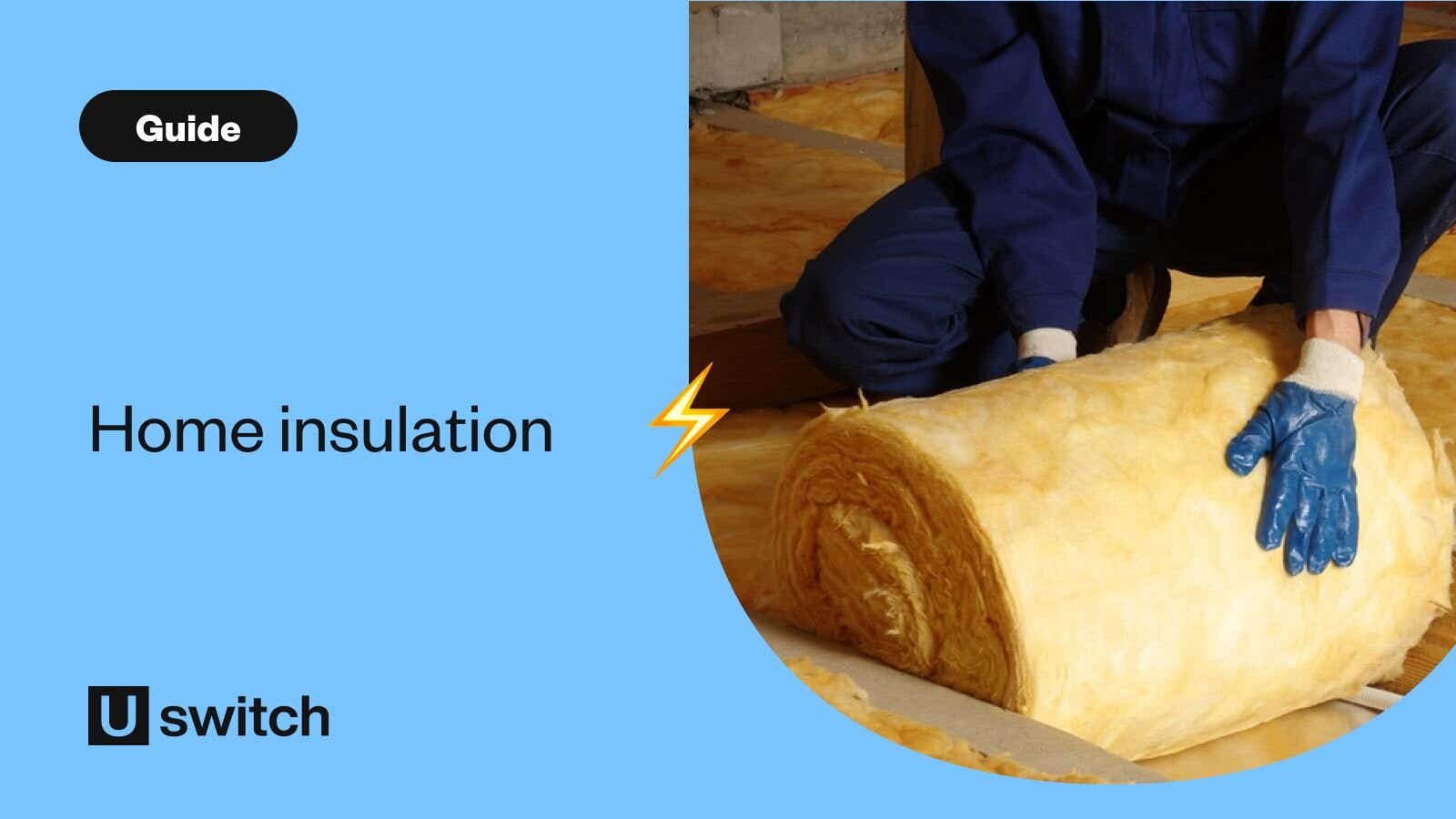
You can switch your energy provider for a better deal on your gas and electricity, but if your home is leaking heat, you’ll still be wasting money.
Improving home insulation makes your property more energy-efficient and, after the cost of installation, you can save potentially hundreds of pounds on your annual energy bill. By improving energy efficiency, you’ll also get a higher EPC rating, which can increase your home’s value.
What does home insulation do?
Home insulation reduces heat loss on colder days and keeps you cool when the weather’s hot. It can also cut noise pollution from traffic and aircraft.
Sometimes only small fixes are needed to improve home insulation, like draught-proofing or adding foil insulation behind your radiators. At other times, improving energy efficiency is a bigger job.
What kinds of home insulation are there?
Different types of insulation suit different homes. Here are the most common:
- Cavity wall insulation fills the gaps between exterior and interior walls
- Solid wall insulation adds insulation to the internal or external sides of solid walls
- Loft and roof insulation fills spaces between the joists (the beams along the floor of your attic) or rafters
- Floor insulation fits between floor joists, particularly effective for timber floors
- Draught proofing seals gaps around doors, windows, chimneys, loft hatches and floors
- Double glazing replaces single-glazed windows. Triple glazing is also an option
- Pipes, water tank and radiator insulation keep water hotter for longer.
What types of insulation material are there?
There are various types of insulation material, each used in a different part of your property. Depending on the material, home insulation comes in rolls, boards or even liquid form. Prices vary depending on the material you choose. Some, such as fibreglass insulation, are more versatile than others.
Home insulation materials have an R-value that indicates their resistance to heat. The higher the R-value (measured in m²K/W), the more effective the insulation. Note: R-value depends on thickness, and exact performance varies between products, so the following should be used as a guide only – always check the manufacturer’s specifications:
| Insulation type | Materials used | Usually supplied as | Widely used for insulating | R-value (per 100 mm) |
|---|---|---|---|---|
| Mineral wool | Glass or stone fibres | Rolls, batts, slabs | Lofts, roofs, walls, floors | 2.5-3.0 |
| Cellulose | Recycled paper fibres | Loose-fill or blown | Lofts, timber-framed walls, suspended floors | 2.5-2.6 |
| Cork | Cork | Granules, boards and other forms | Walls, floors and roofs | 2.5 |
| Rigid foam | PIR, PUR, expanded polystyrene (EPS) or extruded polystyrene (XPS). | Boards | Walls, floors and roofs (pitched or flat) | 2.6-3.3 (polystyrene), 4.5 (PIR) |
| Spray foam | Polyurethane | Spray | Roofs, rafters, walls and beneath floors | 2.7 |
| Foil | Reflective aluminium | Foil | Roofs, walls and floors | Check manufacturer |
If you’re a confident DIYer, you may be able to install home insulation yourself, but some require professional fitting using specialist equipment.
How does heat escape from a home?
Unfortunately, no matter how well-insulated your home might be, heat loss is inevitable.
The main ways that heat can escape are:
- Conduction - this is when heat moves through solid materials like metal or brick. Insulation works here by denying heat a path outside the home by using non-conductive materials to pack cavity walls and other spaces
- Convection - this is the natural tendency of warm air or water or other gases and liquids to rise, while cold air or water falls. Warm air tends to escape through the loft or attic spaces if they are left uninsulated.
How much heat is being lost from different parts of my home?
This depends on your home: its type, age, construction and current levels of insulation. A detached home has more external wall areas than a mid-terrace, for example, while a top-floor flat will lose more heat than a flat surrounded by other heated homes.
According to the Energy Saving Trust, a typical uninsulated home will lose:
- 33% through its walls
- 25% through the roof
- 10-20% through the floor
- 22-32% through other areas: windows, doors and areas of ventilation or through draughts.
This type of heat loss is measured as a U-value. This shows how much heat (in Watts) is lost per square metre of a roof, wall or floor for every degree difference (K) in temperature on each side of the surface. U-values are measured in W/(m2K) – unlike R-values, a lower U-value is better, as it indicates a better insulated surface.
For example, a traditional uninsulated solid brick wall may have a U-value of around 2.1 W/(m²K), compared with just 0.18 W/(m²K) for the external walls of a typical new home built to modern standards.
How much does insulation cost?
Home insulation rates vary depending on the type of insulation you use, the kind of property you have, and whether you fit it yourself.
Here are some estimated home insulation costs from the Energy Savings Trust, based on hiring a professional to do the job.
- Cavity wall insulation (whole property) – around £950 to £3,900
- Solid wall insulation: external wall insulation (whole property) – around £15,000
- Solid wall insulation: internal wall insulation (whole property) – around £12,000
- Uninsulated loft - up to £1,200 (to comply with the recommended 270mm depth).
- Floor insulation – around £1,400 to £2,500 for suspended floor insulation. Solid floor insulation is likely to cost considerably more.
How can I save money on home insulation?
Cheaper home insulation options are available - for example, adding thicker curtains around windows or buying a hot water cylinder jacket (from around £30). For more quick and easy ideas to increase your home’s energy efficiency, read 100+ energy-saving tips for your home.
To save money, you could add home insulation when you’re having other building or decorating work done. Or, if you’re financially able, increasing your mortgage can also cover the cost of expensive home insulation upgrades.
If you’re planning a home insulation upgrade, you should also think about how long it will take to get your money back through energy savings.
For big insulation investments, it also matters how long you plan to live in the property, as well as what you’ll be adding to the sale value.
How much can I save if I get home insulation?
Again, the amount you can save depends on the type of home you live in and the insulation measure you’re installing.
According to the Energy Saving Trust, cavity wall insulation can save between £110 and £380 a year on your energy bills (depending on your home), and loft insulation can save between £140 and £360 a year.
Can I get any home insulation grants?
Yes – you may be able to get a grant or interest-free loan to help with the costs of installing insulation depending on where you live:
- England – those living in private homes, whether as owners or tenants, may be eligible for The Warm Homes Local Grant if they meet certain criteria
- Scotland – Scottish homeowners may be eligible for grants or interest-free loans through the Home Energy Scotland Grant and Loan Scheme
- Wales – the Nest Warm Home Schemes offers free insulation to qualifying households. Homeowners can apply for interest-free loans through the Green Homes Wales scheme
- Northern Ireland – the Affordable Warmth Scheme offers grants to low-income households.
You can also use our tool here to check what energy efficiency grants (including insulation grants) you might be eligible for.
Do I need planning permission for insulation work?
In most cases, you don’t need planning permission for home insulation. But there are some exceptions:
- If you’re adding external wall insulation
- If you have a listed building
- If you live in a conservation area
Even if you don't need planning permission, certain building regulations may still apply. Always check with your local council before starting any home insulation projects.
