Will a dash cam make your car insurance cheaper?

Key takeaways
- Dash cams help resolve disputes quickly and speed up car insurance claims
- Some insurers offer specific dash cam discounts on car insurance, while others may acknowledge their value during a claim
- Not every insurer offers discounts for dash cams, so shop around to find a provider that includes this in their policies
- Be mindful of the potential risk from thieves, as well as the data security of your dash cam
What is a dash cam?
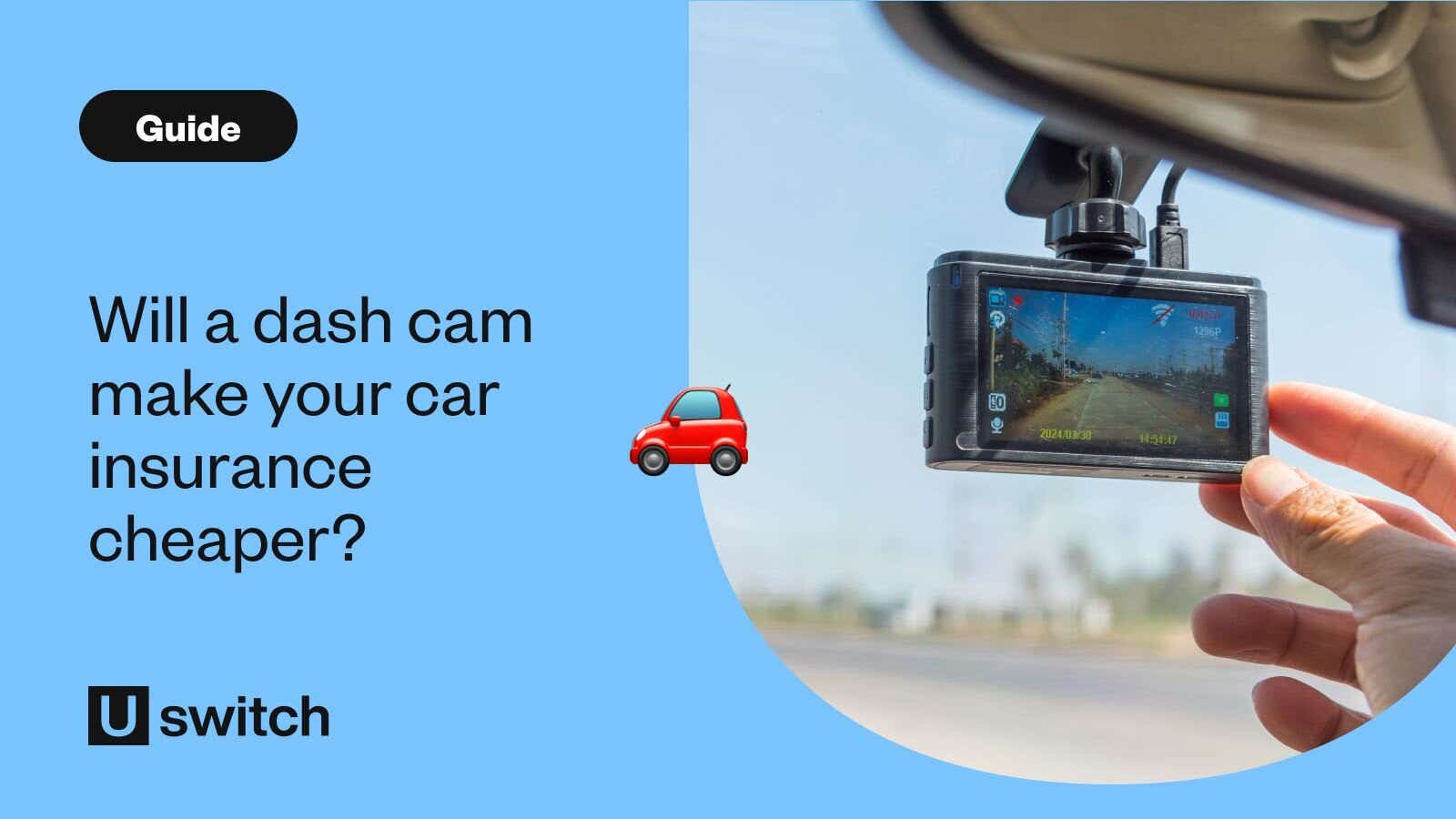
A dash cam is an on-board camera that continuously records the road from the vehicle's dashboard or windscreen.
If you're involved in a car accident, a dash cam can provide crucial evidence to determine who was at fault. This is much more reliable than memory, especially after the shock of an accident.
The police can also use dash cams to identify and prosecute dangerous driving.
An increasing number of insurers are now accepting dash cam footage as evidence in insurance claims.
How much does a dash cam cost?
Prices vary significantly based on quality and features, ranging from budget models to premium front-and-rear systems with cloud storage.
Basic models can cost less than £50, while some high-range models can cost hundreds of pounds.
What is the best dash cam for a car?
The best dash cam model depends on your personal requirements and individual budget.
Good models typically offer high-resolution video (HD, UHD, or 4K) to ensure clear footage. Video quality that isn't above a certain standard may be void as evidence in court.
You'll also want to look for reliable storage and include both front and rear recording capabilities.
What are the benefits of a dash cam?
The main benefit of dash cams is that they can act as an impartial set of eyes in the event of an accident.
Besides that, they can also:
- Protect your no-claims discount: They help keep your discount by showing you weren't at fault
- Settle claims and disputes more quickly: Dash cam footage can help establish who was at fault in the event of an accident and may also provide useful evidence if your car is vandalised or deliberately damaged while parked
- Deter common instances of insurance fraud: They can help discourage fraudulent activity such as ‘crash for cash’ scams, where accidents are deliberately staged to secure an insurance payout, as well as practices like fronting, where a more experienced driver is falsely listed as the main policyholder to reduce premiums
- Improve your driving: The cabin view dash cam can be used to check your driving habits
- Help emergency services find you: Useful if you break down or have an accident, by using a GPS tracker function
- Record what's happening inside your car: This can be ideal for taxi drivers or those who share a car
What are the disadvantages of a dash cam?
While dash cams can be useful when it comes to providing evidence, there are also some potential drawbacks. These include:
- Difficult installation: Some dash cams are very complex to set up, and can take several hours for hardwired, front and rear systems
- Risk of battery drain: A dash cam's battery life varies depending on the type and model. But higher resolution and continuous recordings use more power
- They don't always tell the full story: Hazards or contributory factors might be out of view of the camera, so the footage may provide an incomplete picture
- The need to declare the device to your insurer: While simple, plug-in dash cams don't legally need to be declared to your insurer, hardwired models do. This is because they count as a car modification
- They can attract thieves: Dash cams are often positioned in clear view, putting them at risk of being stolen. Especially with more expensive premium models
- They can raise data concerns: Dash cams can raise data privacy concerns because they collect huge amounts of personal data. This includes video, audio, and location, so it's important for dash cams to have secure storage and restricted access. Use strong passwords, disable wifi to prevent hacking, and turn off microphones
Does a dash cam reduce car insurance costs?
Yes, many insurers view dash cams favourably, often offering a small discount or protecting your No Claims Discount (NCD) in a non-fault claim.
Similar to black box insurance, dash cams help improve your road safety, which can help bring down your car insurance premiums.
Not every insurer will offer dash cam discounts, though. The best way to find a dash cam deal is to shop around - that way, you can find insurance providers that offer these discounts as standard.
Which car insurance companies offer dash cam discounts?
A growing number of car insurance providers offer exclusive deals or specific discounts, particularly when the dash cam is linked to safety schemes or a recognised brand like Nextbase.
Some providers won't offer upfront dash cam discounts, but acknowledge their value in claims. So it's worth checking policy details if you're unsure.
Can dash cam footage be used as evidence in courts?
Yes. High-quality, continuous footage is commonly accepted as evidence by police and insurers to determine liability in an incident.
It's important to note that if your footage is below a certain standard, it may be deemed inadmissible in court.
It's worth noting that any potential traffic violations within the footage will be scrutinised, including any of your own.
Get a car insurance quote
See a range of car insurance quotes in just a few minutes when you compare with Uswitch
